
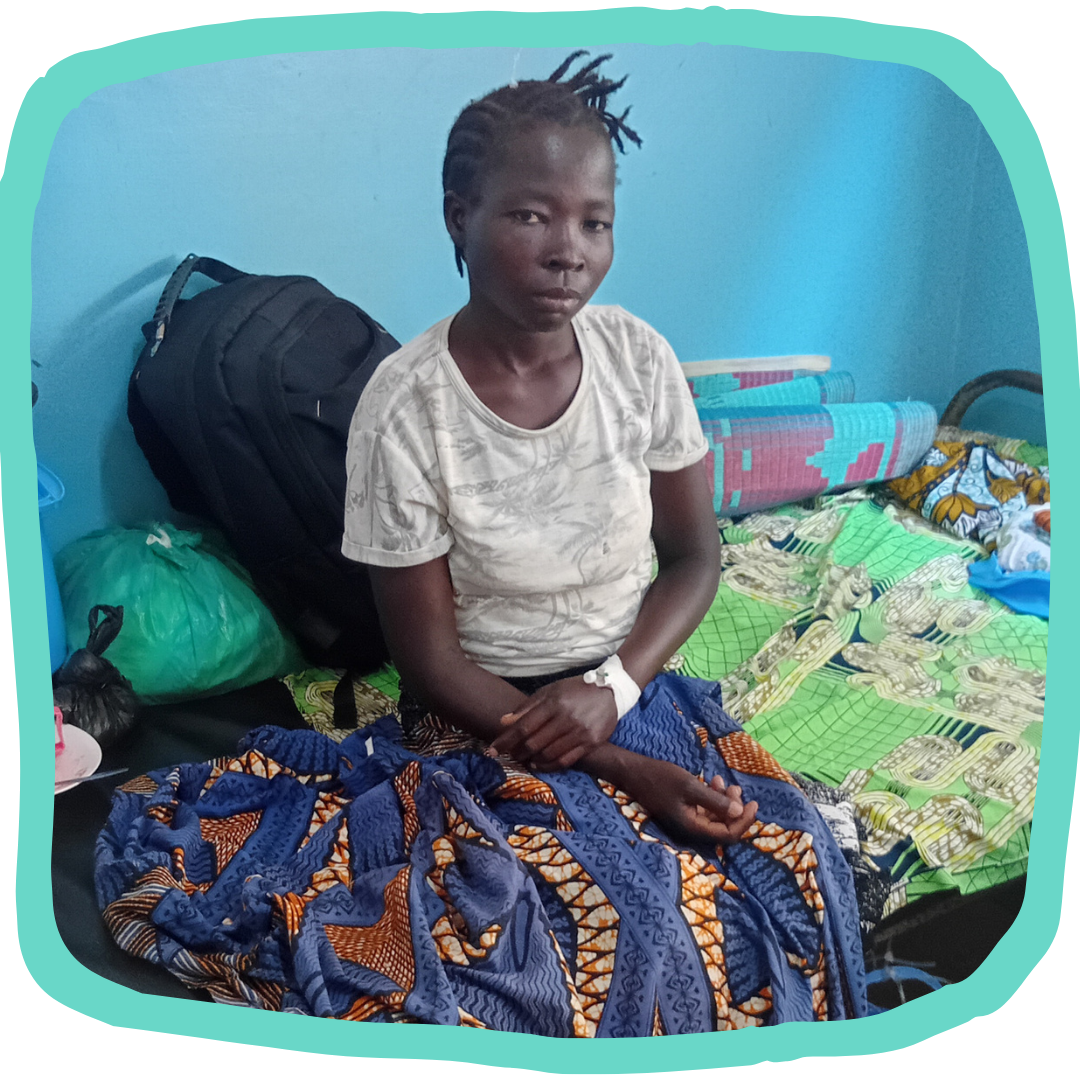
 For eight years, Efikia Monica lived with the physical pain and stigma caused by obstetric fistula. Today, after receiving surgery at the Kiryandongo fistula camp in March, she is looking toward the future with renewed hope.
Monica’s injury began during her first pregnancy. Living in a rural area near Arua, she had limited access to antenatal care because the nearest health facility was far from her home. When labor began, she spent three days attempting to deliver at home with the help of a traditional birth attendant. When it became clear that she could not deliver safely, she was taken to a nearby health facility and later referred to another hospital across the border in the Democratic Republic of Congo. By the time she received surgery, her baby had already died.
Shortly after the operation, Monica realized that urine was continuously leaking. The injury—an obstetric fistula—left her incontinent.
When she returned home, the stigma surrounding the condition made life extremely difficult. Her husband’s family forced her to leave, believing she had brought a curse upon them. After further rejection from relatives, Monica eventually found herself without a permanent place to stay. For several years, she survived by begging and sleeping at the hospital in Arua.
Despite these hardships, Monica never stopped hoping she might one day receive treatment.
Her chance came through a family connection. Monica’s brother had married a woman who had previously suffered from the same condition but had received fistula repair surgery. With support from a fistula ambassador and the UVP team, Monica was brought to Kiryandongo Hospital for treatment.
There, she underwent surgery that successfully repaired her fistula.
For the first time in eight years, Monica no longer leaks urine.
“I feel better now that I do not leak anymore,” she said. “I think this is the beginning of another chapter in my life.”
As she returns home, Monica hopes to rebuild her life and start a small business so she can support herself.
“Thank you very much for making us feel valued again,” she said. “Please continue helping many more people like me who are suffering without hope.”